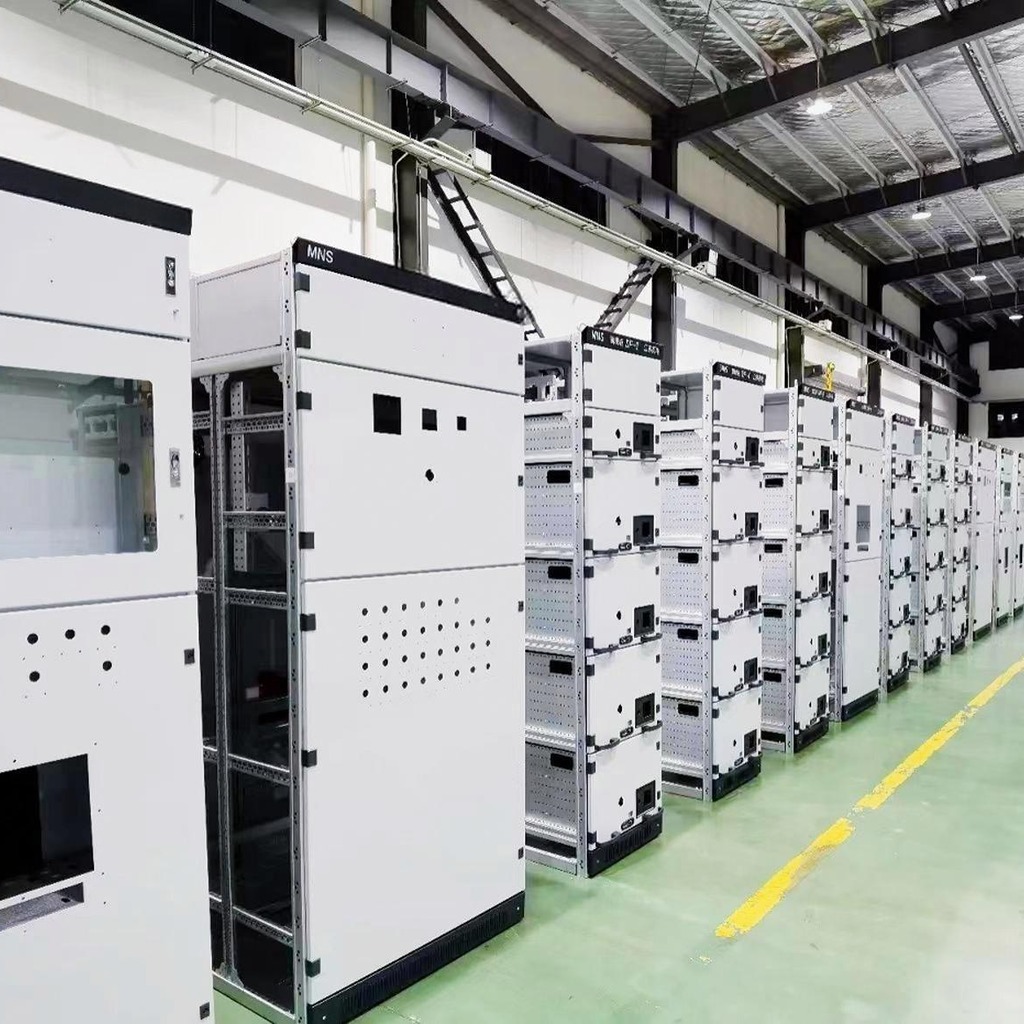
Power topology is the first decision in a data centre project and the one most often deferred until the electrical drawings are already frozen. By then the redundancy model is baked into the switchgear, the busway routes and the floor loading — and changing it means redesigning the room.
This guide walks through the four common topologies, the five layers from utility to rack, and the specification details that trip up export projects.
N, N+1, 2N and 2(N+1)
| Topology | What it means | Fault tolerance | Typical use |
|---|---|---|---|
| N | Just enough capacity, no spare | None — any failure drops load | Small edge rooms, non-critical IT |
| N+1 | One spare module in each system | Survives one module failure | Enterprise server rooms |
| 2N | Two complete, independent paths | Survives loss of a whole path | Colocation, finance, healthcare |
| 2(N+1) | Two paths, each with its own spare | Survives a path loss plus a module failure | Tier IV, mission critical |
2N doubles the electrical capex and usually halves the achievable load per square metre, because two independent paths mean two sets of switchgear, two busway runs and two UPS rooms. It is the right answer when downtime costs more than the building; it is the wrong answer for a 200 kW edge site that will never be audited.
From utility to rack: five layers
- Utility intake and transformer — dual feeds from separate substations if 2N is required; a single feed makes 2N a fiction.
- Main switchgear and ATS — automatic transfer between utility and generator, with a tested transfer time your IT load can survive.
- UPS — modular frame with N+1 modules is usually more serviceable than a monolithic block, and lets you grow in steps.
- Distribution — busway or cable to the row; busway for flexibility and tap-off density, cable for fixed low-density rooms.
- Rack PDU — the last metre, and the layer where most monitoring data actually comes from.
Each layer must not become a single point of failure for the layer above it. A 2N UPS feeding a single busway is not 2N.
The four PDU types
| Type | Function | When to specify |
|---|---|---|
| Basic | Distribution only | Low-density racks, budget projects |
| Metered | Local or remote current reading | Any rack where you need to know the load |
| Switched | Per-outlet remote on/off | Remote sites, colocation, reboot without travel |
| ATS / dual-input | Two feeds, automatic source selection | Single-corded equipment in a dual-path room |
For a 2N room the practical pattern is two PDUs per rack, one per path, with servers on dual cords. Where equipment has only one cord, an ATS PDU keeps the redundancy promise instead of quietly breaking it.
Busway or cable
Busway wins when rack density is unknown or likely to change: tap-off boxes can be added without a shutdown, and a row can be re-purposed in a day. Cable wins on capex for fixed, low-density rooms and is easier to source locally in markets where busway lead times are long.
A hybrid is common and sensible: busway on the main rows, cable for the small rooms and the security or telecom racks.
Earthing, neutral and the 400/230 V question
Export projects run into trouble here more than anywhere else. Confirm three things before the switchgear is built:
- System earthing — TN-S, TN-C-S, TT or IT. The protection scheme, RCD selection and neutral arrangement all follow from it.
- Voltage and frequency — 400/230 V 50 Hz in most of Europe, Africa, the Middle East and Asia; 480/277 V 60 Hz in North America and parts of the Gulf. A 60 Hz generator feeding 50 Hz UPS modules is a design error, not a commissioning issue.
- Neutral sizing — with modern switch-mode IT loads, harmonic current in the neutral can exceed the phase current. Over-sizing the neutral is cheap insurance.
Metering: measure at the branch, not the building
Building-level metering tells you the bill. Branch-circuit monitoring tells you which rack is at 80% and which circuit is about to trip. For any room above roughly 100 kW, branch monitoring at the PDU pays for itself the first time it prevents an unplanned outage.
Practical targets: per-rack power and energy, per-branch current with alarms at 80% of breaker rating, and a data path that survives the loss of the monitoring server.
What export projects get wrong
Certification assumptions. IEC vs UL vs local authority approval is not interchangeable. Confirm the accepting authority before fabrication, not at customs.
IP rating for the environment. A containerised data centre in a coastal or desert site needs a documented IP rating and anti-corrosion treatment; an indoor IP20 cabinet will fail within a season.
Spares and lead times. A breaker that takes twelve weeks to arrive turns a 30-minute fix into a quarter. Specify a critical spares list with the order.
Documentation language. Drawings, labels and O&M manuals in the operator’s language are usually a contractual requirement in government projects. Confirm before printing.
Specification checklist
- Topology (N+1 / 2N) written down and agreed with the IT load owner
- Dual utility feeds verified at the substation, not assumed
- UPS modularity, runtime at end of life, and battery replacement plan
- PDU type per rack, with ATS for single-corded equipment
- Earthing system, voltage and frequency confirmed against the site
- Neutral and earth bar sizing for harmonic load
- Branch-circuit monitoring with alarm thresholds
- Certification path, IP rating, spares list and documentation language
Frequently asked questions
Is 2N always better? No. It doubles electrical capex and reduces usable density. Choose it where the cost of downtime exceeds the cost of the second path.
Can we start with N+1 and upgrade to 2N later? Only if the room, the busway routes and the switchgear space were designed for it. Retrofitting a second path into a finished room is usually a rebuild.
Do we need a generator as well as a UPS? The UPS covers the transfer window; the generator covers long outages. A UPS alone gives you 10–15 minutes, which is enough only if the site can be shut down cleanly in that time.
We build and export low-voltage distribution cabinets, switchgear and rack-level distribution for containerised and modular data centres. See the electrical equipment and power distribution range, the low-voltage distribution cabinet and switchgear, the power distribution box and accessories, or read our modular data centre cost breakdown.