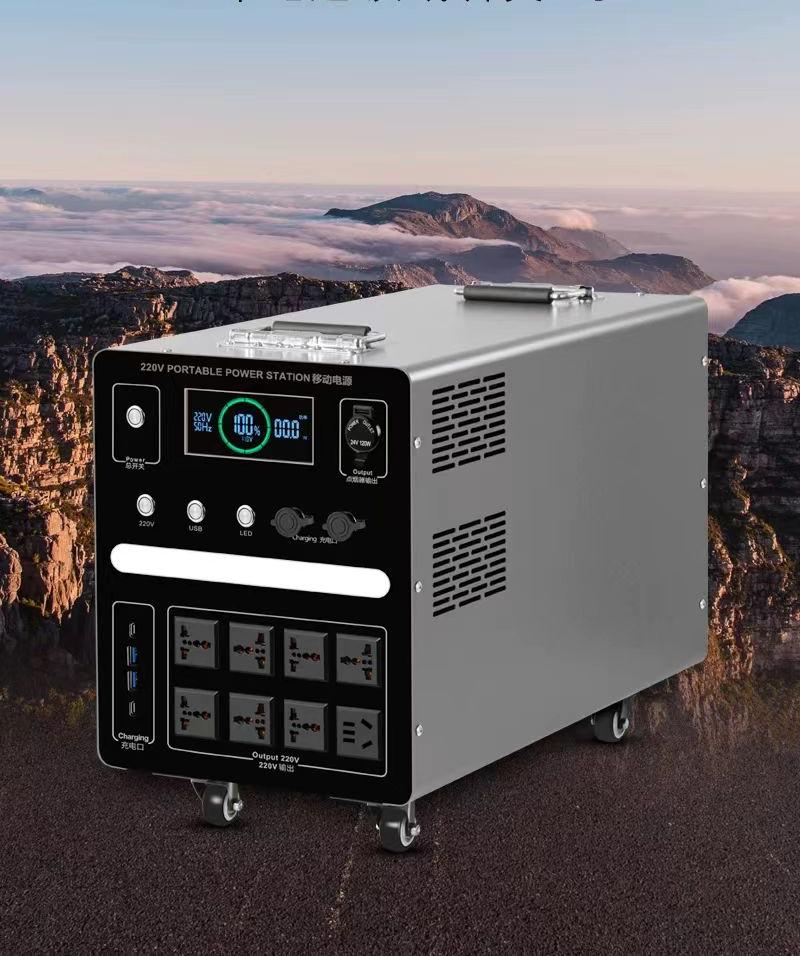
Portable Power Station / ESS
Portable power station and energy storage for outdoor, backup and off-grid use, with AC and DC outputs and solar charging, configured for the destination country.
Capacity printed on the box is not the energy that comes out of the socket. A unit rated at a nominal figure loses part of it to conversion and to the depth of discharge the battery is allowed, so what matters is the usable energy and the continuous output the inverter can hold. Output waveform decides whether a motor or a laptop charger is happy on it. Recharge time then sets how the unit fits a working day, and whether solar input can top it up between uses.
How it is specified
- Usable energy, and the continuous and surge output in watts
- Output waveform, and whether it is a pure sine wave
- AC outlet types and voltages, plus DC outputs: USB, 12 V, or an Anderson-style connector
- Solar input voltage range and maximum input power
- Recharge time from mains, and whether pass-through charging is supported while in use
- Battery chemistry, cycle life, and the protections handled by the BMS
- Weight and handling: fixed handle, wheels, or a stackable case
- Whether it can be expanded with an external battery module
Where it is used
- Outdoor events, film sets and site work
- Home backup for essential loads
- Off-grid cabins, boats and remote stations
- Mobile clinics and field response teams
Customisation for the destination market
- AC output voltage and frequency set for the market: 100–120 V or 220–240 V, 50 or 60 Hz
- Outlet type to match the country: US, EU, UK, AU, or a universal socket
- Plug, labelling and documentation in the destination language
- Battery capacity, enclosure colour and branding configurable for volume orders
- Certification and marking agreed before production, not after
At a Glance
| Product Category | Electrical Distribution & Power System Series |
|---|