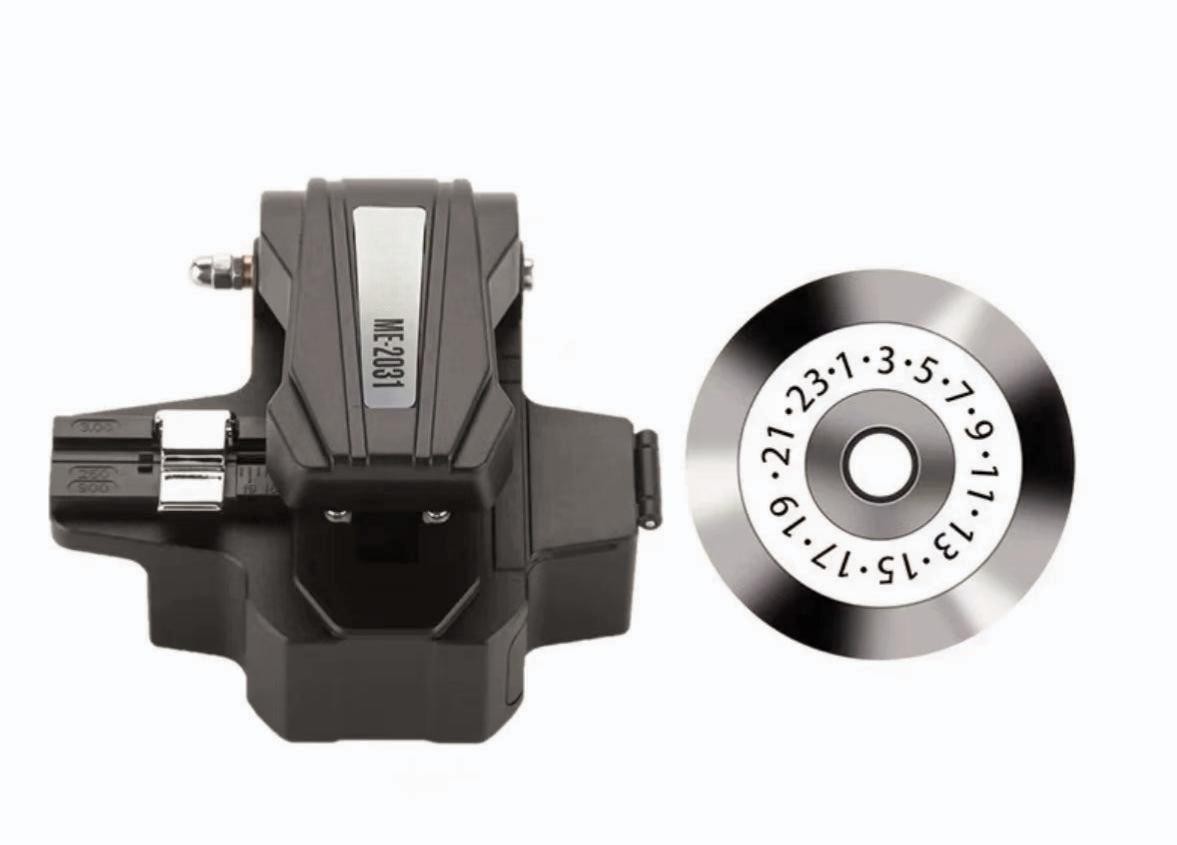
Optical Fiber Cleaver
Hand tool that scores the fiber and breaks it at a controlled angle before splicing, with an indexed blade and a scrap collector.
A splicer can only make a low-loss joint if the end face is flat and square. The cleaver holds the fiber under tension, scores the cladding with a blade and breaks it in one movement, so the end comes out within half a degree of square. Blade positions are indexed and rotated as they wear, which keeps the tool in service far longer than a single scoring edge would.
How it is specified
- Cleave angle, typically 0.5 degrees or better
- Number of blade positions, usually 16 or 24 before replacement
- Single fiber or ribbon, and how many fibers at once
- Accepted coating and cladding diameters, and the bare fiber adapter
- Scrap collector, so offcuts do not end up on the floor
- Body material, weight and whether it fits a field pouch
- Spare blades and the adapter set supplied with the tool
Where it is used
- FTTH installation and customer drops
- Backbone and metro splicing
- Data centre and campus cabling
- Field repair and maintenance kits
At a Glance
| Product Category | Network & Fiber Infrastructure Series |
|---|