Studio Monitor Speaker
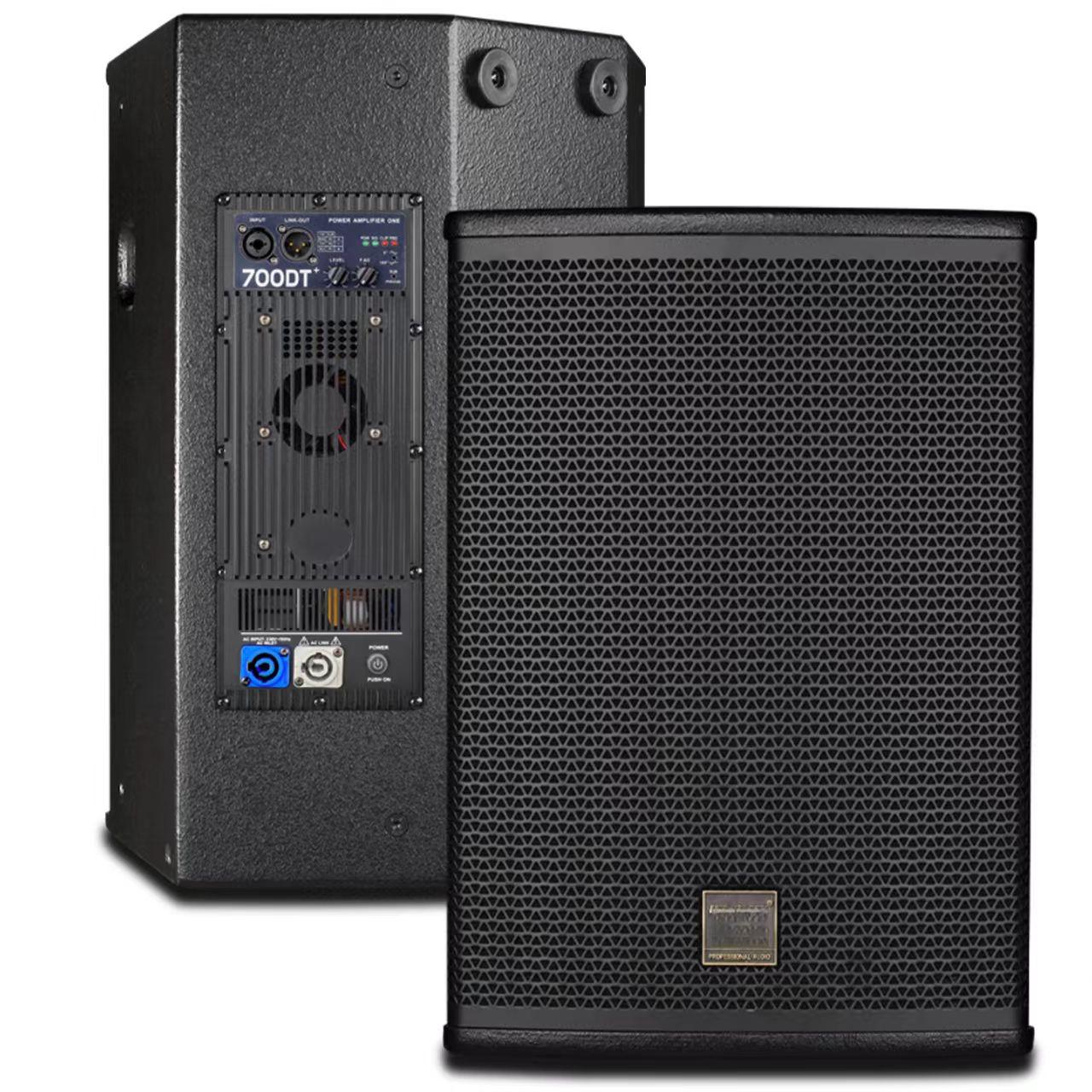
Active near-field studio monitor with a flat response for mixing, broadcast and post-production, with balanced inputs and rear level control.
A monitor is judged by what it does not add: if the midrange is flattered, every mix made on it travels badly. A near-field monitor is built to stay flat and to keep the listening position narrow, so the room colours the result as little as possible. Most units are active, with the amplifier matched to the driver inside the cabinet. Port position decides how close the cabinet can sit to the wall behind it.
How it is specified
- Driver complement and cabinet size for the intended listening distance
- Active with built-in amplification, or passive with an external amplifier
- Amplifier power per driver, and the crossover point between them
- Frequency response, and the low-frequency limit without a subwoofer
- Inputs: balanced XLR, balanced TRS, or unbalanced RCA
- Port position, and the minimum distance to the wall behind the cabinet
- Level and room-compensation controls on the rear panel
Where it is used
- Audio production and mixing rooms
- Broadcast and post-production suites
- Edit suites and voice-over booths
- Reference listening during system commissioning
At a Glance
| Product Category | Professional Audio & Broadcast Series |
|---|